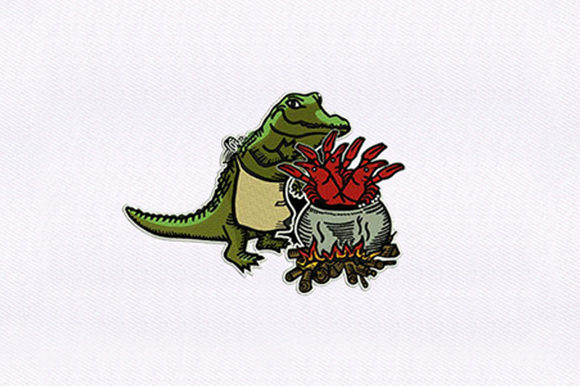
Reviewing the Seafood Alligator Design for Real Embroidery Projects
As a designer who runs a small embroidery business, I’m always looking for designs that are not only visually appealing but also stitch out reliably on real products. When I came across the Seafood Alligator Design on Creative Fabrica, I immediately considered it for a series of custom kitchen towels and aprons for a local seafood restaurant. This review is based on that practical evaluation, thinking about how this embroidery file would perform in a commercial and handmade context.
First Impressions: A Playful Design with Commercial Potential
The Seafood Alligator Design presents a charming, illustrative take on the “Food” category. It’s not a generic icon; it has a personality. The alligator character paired with seafood elements creates a narrative that’s perfect for themed merchandise. The detail level suggests a good mix of satin stitch for outlines and fill stitch for the larger areas, which is a reliable combination for clean results. My first thought was that this design would naturally fit projects like custom aprons, tote bags, and pillow covers for a coastal or culinary-themed brand, or even as a unique gift for a fishing enthusiast.
Where This Design Shines in Product Applications
From an embroidery designer’s perspective, the utility of a file is measured by its versatility across products. The Seafood Alligator Design has a decorative appeal that translates well to several key items I regularly produce.
- Tote Bags & Aprons: On cotton canvas or twill, this design would stitch out beautifully. Its thematic nature adds significant value to otherwise utilitarian items, making them perfect for Etsy listings or craft fair products.
- Sweatshirts & Custom Apparel: For a boutique merchandise line or a family-run seafood shack, embroidering this on polos or sweatshirts creates instant brand consistency and visual appeal.
- Baby Items & Nursery Decor: The whimsical character makes it suitable for a playful baby blanket or pillow cover in a nautical-themed nursery, enhancing its giftability.
- Patches & Caps: The design’s likely composition (without knowing exact stitch counts) seems balanced enough to adapt for a curved cap surface or an embroidered patch, provided the small details are manageable.
- Kitchen Towels & Home Goods: This is perhaps its most natural home. It elevates a simple kitchen towel into a handmade presentation piece, ideal for product photography and customer engagement.
Practical Considerations for Stitching Success
Before committing any design to a client’s order, I run a mental checklist of practical hurdles. Here’s how I considered the Seafood Alligator Design for real embroidery work.
File Compatibility and Preparation
The product details list an impressive range of embroidery file formats: 10O, ART, CND, DSB, DST, DSZ, EXP, HUS, JEF, PCS, PEC, PES, TAP, VIP, VP3, XXX. This wide compatibility is crucial for professionals using different machines. However, the specific hoop size, stitch count, and density are not provided here. My strong advice is to always check the product details on the Creative Fabrica page before purchase to confirm it matches your machine’s capabilities and your intended hoop size.
Navigating Stitch Density and Fabric Choices
A design with potential dense fill areas, like this one, requires careful planning. On textured or stretchy fabric, proper stabilizer choice is non-negotiable to prevent puckering. For dark fabric, I would plan a test on scrap fabric to check thread color contrast—perhaps using brighter greens and whites to pop against navy or black. The potential for tiny lettering or layered details within the design means you must review stitch density in your software and possibly adjust pull compensation for perfect results.
Ensuring Durability for Frequently Washed Items
Many products featuring this design, like aprons and kitchen towels, will undergo frequent washing. A well-digitized file with appropriate underlay and stitch structure is key. After stitching, I always inspect small details for integrity. If the design uses intricate running stitch details, they must be secure. This directly affects buyer trust and the longevity of your handmade product.
How This Embroidery File Affects Product Value
Using a high-quality, unique machine embroidery design like this isn’t just about decoration; it’s about business. For creative entrepreneurs and small business owners, the right design can elevate a simple item into a premium product.
- Visual Appeal & Brand Consistency: This themed design can become a signature element for a brand, making your handmade shop offerings instantly recognizable.
- Giftability & Customer Engagement: A well-embroidered item tells a story. A tote bag with the Seafood Alligator Design is more engaging than a plain one, making it a compelling seasonal handmade gift.
- Product Photography & Printable Mockups: Clean embroidery makes for excellent photos and digital embroidery file assets for mockups, which are vital for successful Etsy listings.
Final Thoughts for Fellow Embroidery Designers
The Seafood Alligator Design from Creative Fabrica presents a strong option for those in the culinary, coastal, or novelty gift markets. Its charm is undeniable, and its wide file format support makes it accessible. However, the professional approach is always cautious.
Before selling any finished items, confirm file details and licensing on the product page. Always run a test stitch on your intended fabric, comparing light and dark fabric mockups in your software if possible. Pay attention to the stabilizer needed for your specific project—a kitchen towel might need a different approach than a sweatshirt.
If the digitization is clean—with manageable stitch density and well-defined elements—this design could become a profitable staple in your portfolio for commercial embroidery projects and personalized gifts. It feels like a design that, when stitched well, adds genuine value and character to the final product, which is ultimately what our customers are looking for.