Pinky Swearing Fingers Embroidery Design Review
Every craft fair season, I look at my library of embroidery files with a critical eye, asking: which designs will turn heads on a crowded market table and convert into sales? Today, I’m putting the Pinky Swearing Fingers Design under that spotlight. This review is grounded in the reality of preparing products for a weekend booth—totebags, aprons, tea towels, patches, caps, pouches, pillow covers—and figuring out where this design shines.
First Impression and Market Mood
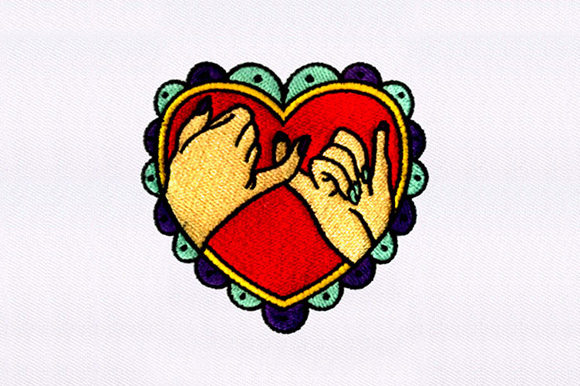
The title alone, Pinky Swearing Fingers, instantly evokes a sense of playful promise and heartfelt connection. It’s not overtly romantic; it’s more about friendship, loyalty, and gentle bonds. This gives it a broader appeal than a classic hearts-only Valentine's Day motif. The mood leans toward cute, sentimental, and modern. It feels like a design that would catch the eye of someone looking for a gift that says “you’re my person,” whether for a partner, a best friend, or a child. In a booth surrounded by more generic patterns, this narrative hook is a quiet advantage.
Product Performance: Where It Works Best
Not every machine embroidery design performs equally across different products. Here’s my practical assessment based on typical craft fair product categories.
Strong Candidates for High Visibility
For tote bags and market bags, this design would be excellent as a medium-to-large focal point. The simplicity of the gesture—two fingers linking—makes it easy to understand at a glance from a few feet away, crucial for booth traffic. On a solid-color canvas tote, it would look clean and intentional.
Embroidered patches are another standout application. This design inherently tells a small story, perfect for a patch applied to a jacket, backpack, or hat. Patches sell well as affordable, quick-to-produce items, and the Pinky Swearing Fingers Design lends itself to being a conversation-starting accessory.
For small pouches and pillow covers, used as a smaller accent, it adds a touch of personality without overwhelming the item. On a linen pillow cover, it could achieve a soft, handmade quality that elevates the product’s perceived value.
Considerations for Specific Applications
On aprons and kitchen towels, especially textured ones, success depends on stitch execution. If the design has very dense stitch areas for the fingers, it could feel too heavy on a lightweight tea towel fabric. It’s advisable to test on scrap fabric first. However, on an apron pocket or corner, it would be a charming, personal touch for a handmade product.
For caps, the curved surface is always a challenge. Tiny details or small lettering (if included in the design file) can lose clarity. The core finger shapes should be bold enough to translate well, but I would strongly recommend a physical test on a cap before committing to batch production.
Practical Production and Selling Points
Moving from a digital file to a sellable product requires a checklist.
Design Clarity and Batch Production
This design seems to have a clear, central icon. That’s good for customer comprehension and for batch production. If the design is straightforward without excessive color changes or microscopic detail, it becomes efficient to run multiple items—a key point for stocking a fair booth. Its emotional resonance also makes it repeatable; you wouldn’t feel awkward having ten tote bags with the same design on display, as it appeals to a common feeling.
Photography and Online Sales
For your Etsy listings or online shop, it photographs well. The subject is graphic and likely contrasts nicely against fabric. Creating a real mockup—not just a printable mockup—on a few different fabric colors (light and dark) will give you the best assets. On dark fabric, ensure thread contrast is high; a white or pastel thread for the fingers would pop. Good photography directly impacts buyer engagement online and can be repurposed for social media to build anticipation for the fair.
Critical Embroidery Designer Notes
Before you stitch this onto any product for sale, a disciplined pre-check is non-negotiable.
- Test on Scrap Fabric: Always stitch the embroidery file on a scrap of the actual material you plan to use (e.g., canvas for tote bags, linen for pillows). This reveals how the fabric texture interacts with the design.
- Check Thread Contrast and Density: Look for any overly dense stitch areas that could pucker thicker fabrics or make the design feel stiff. Also, verify that the chosen thread colors stand out clearly against your final product fabric.
- Review Hoop Size and Stabilizer: The product description lists many file formats (10O, ART, CND, DSB, DST, DSZ, EXP, HUS, JEF, PCS, PEC, PES, TAP, VIP, VP3, XXX), which is excellent for machine compatibility. However, hoop size is not specified. You must check the included files to confirm the maximum hoop size required and match it to your product. Use the appropriate stabilizer for the fabric and item; a tote bag needs a sturdy stabilizer, while a tea towel might need a lighter one.
- Inspect Small Details: If the design includes any fine lines or text, stitch it at the size you intend to sell. See if it remains crisp. Sometimes scaling a design down for a small pouch can blur delicate elements.
- Confirm Commercial Licensing: Before selling finished products, absolutely verify that your purchase of this digital embroidery file includes a license for commercial embroidery and sale of handmade items. This is the foundation of your small shop product business.
Booth Display and Final Value Assessment
At the craft fair itself, the Pinky Swearing Fingers Design contributes to your booth display strength through its narrative. A tote bag featuring it hung prominently can draw people in. A basket of patches with this design offers an easy, low-commitment purchase that spreads your brand. It enhances handmade quality by showing thoughtful design selection, not just random decoration.
Ultimately, this design isn’t a flashy festival piece; it’s a gentle, personable one. Its best chance to sell is on products that are themselves gifts or personal accessories—the tote bag someone buys for a friend, the patch a teen adds to their jacket, the pillow for a cozy bedroom. It adds value by adding meaning. For the embroidery business owner looking to fill a booth with items that have both aesthetic charm and emotional pull, the Pinky Swearing Fingers Design is a solid, versatile contender worth putting into production.